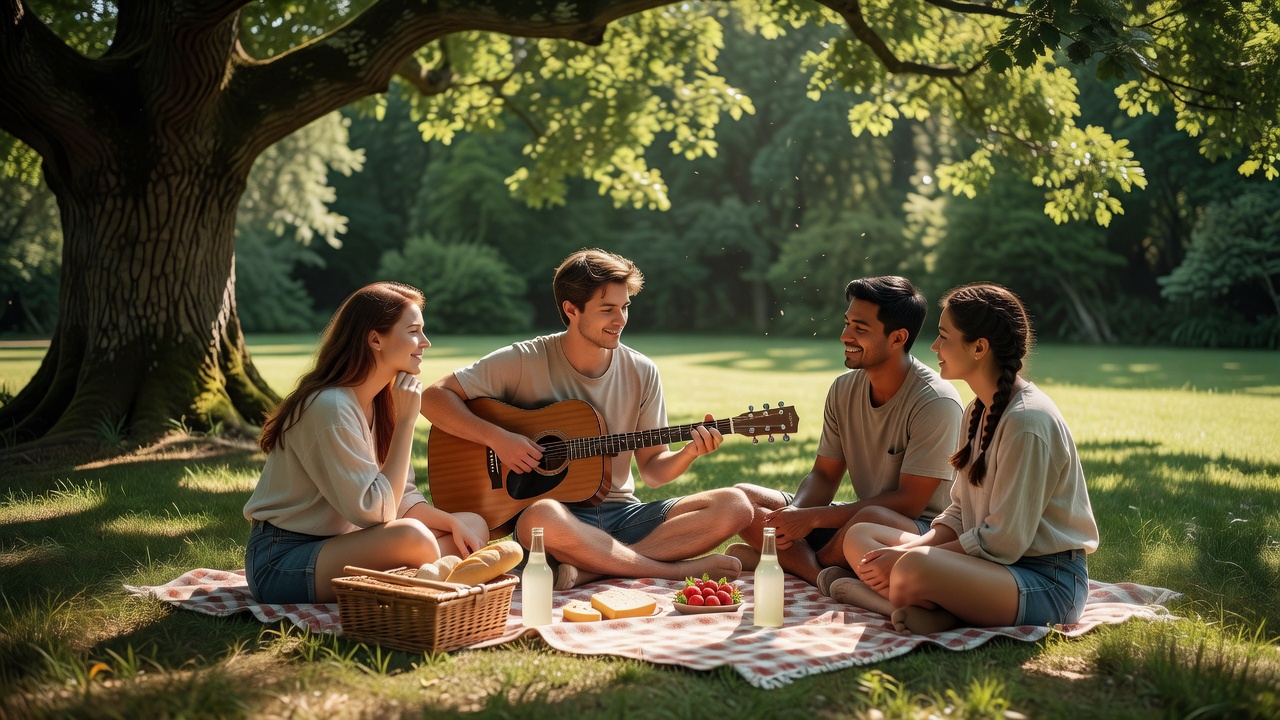
Decide what the music is there to do
Start with a simple question: should the music support conversation, offer a short shared moment, or become the main activity? For a relaxed picnic, the first two are usually easier to host. Tell guests what you have in mind before they arrive. Someone expecting a chat may feel stranded if every conversation becomes an interruption to a long set.
Ask your player what feels comfortable, too. Bringing an instrument does not create an obligation to entertain everyone. Agree that they can stop, eat and join the conversation. One guitar or ukulele is often enough for a small circle; adding more instruments can make listening harder rather than making the afternoon richer.
Choose songs that invite, not test
Build a small selection around familiar melodies, manageable keys and a comfortable vocal range. Familiarity is personal: do not assume everyone shares the same language, musical background or favourite decade. Ask for a suggestion in the invitation, and treat suggestions as possibilities rather than promises. A simple instrumental tune works when nobody wants to sing.
For inspiration, a traditional melody such as “Greensleeves” can be played gently, while a familiar chorus from the Beatles or Bill Withers may invite recognition. Choose material your player already knows rather than handing over an ambitious request list on arrival. Song recordings, lyrics and arrangements can have different copyright protections; check requirements before distributing copies or organising a public performance.
Give the afternoon some breathing room
Let arrivals happen without an immediate musical task. People may need water, directions to the toilet or time to settle their children. After food, offer a short musical moment and then stop while it still feels easy. You can say, “Would a couple of songs suit everyone?” and genuinely accept a no.
Silence between songs is useful. It allows a conversation to resume and gives the player a rest. Avoid filling every pause with another track from a speaker. If people drift into pairs or start a thoughtful conversation, that is not a failed gathering. The music has done its work if it helped people feel at ease.
Make participation genuinely optional
Invite singing without calling on individuals. Do not pass an instrument around as a compulsory game, and ask before giving a child a shaker or other percussion. Small repeated sounds can become surprisingly tiring at close range. A guest with sound sensitivity should not have to explain their needs publicly to earn a quieter seat.
Useful invitations leave a clear exit: “Join the chorus if you feel like it,” or “We will play for a little while; chatting further over is fine.” Avoid surprise solos and teasing about musical ability. Listening, drawing, eating and taking a short walk can all coexist with music when the setting and the people allow it.
Work with the place, not against it
Check permission for instruments even if nothing is amplified. A sheltered corner can make a guitar easier to hear, but a wall or enclosed courtyard may also carry sound towards people outside your group. Keep away from nesting wildlife, designated quiet spaces and other visitors seeking solitude. If the surroundings are already busy, choose fewer songs rather than playing harder.
Wind makes tuning and lyric sheets awkward. Use a stable stand only where it will not block a route, secure loose pages and keep cases closed when not in use. Instruments should stay out of direct sun and away from damp grass. Follow the instrument maker’s care advice instead of assuming a case will protect it from heat in a parked car.
End with the people, not the set list
Watch for small signals: leaning away, repeated requests to hear a conversation, children becoming unsettled or players looking tired. Pause without making anyone responsible for ending the music. Thank the player in a low-key way, offer food or water and make packing up a shared task. There is no need to finish every song you planned.
If you want a little structure, think in three loose moments: arrival and conversation, food and a few tunes, then a quiet activity or a walk. Keep the order flexible. A comfortable gathering is measured by how welcome people feel, not by how much of your programme you complete.