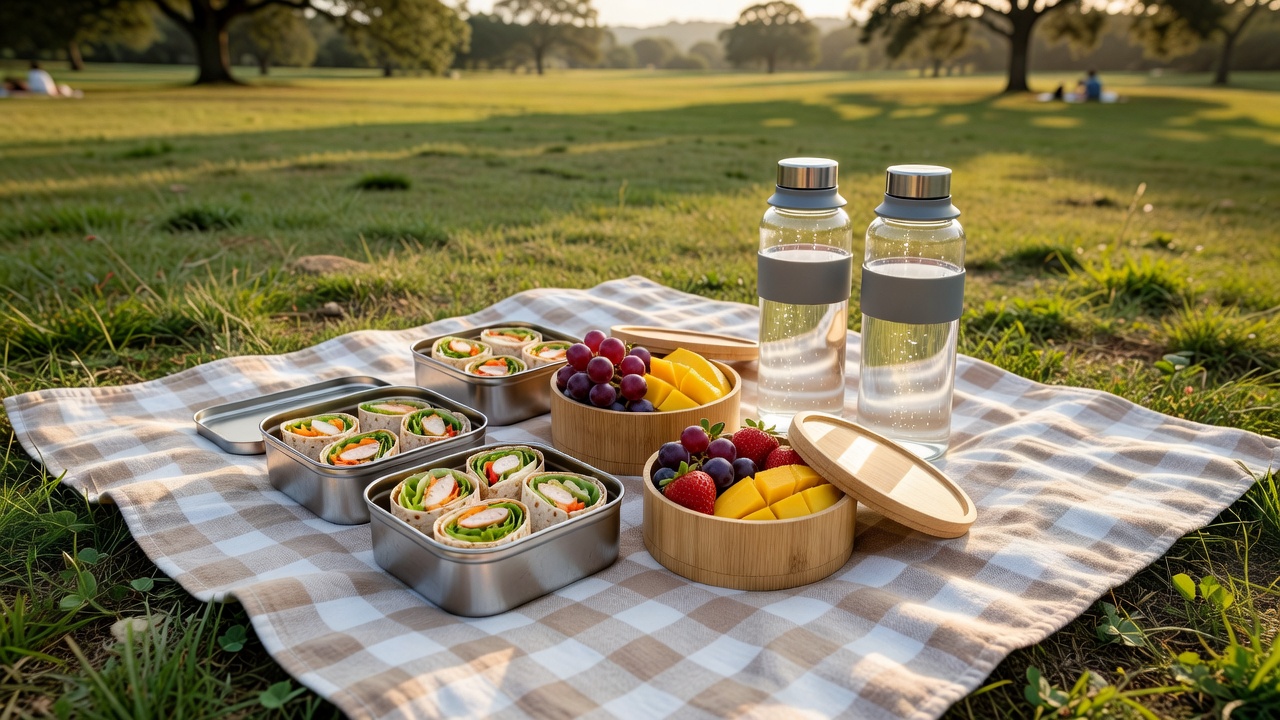
Choose a small menu with clear ingredients
Begin by asking about allergies, dietary requirements and practical eating needs. Invite private replies, and distinguish a preference from a medical requirement without asking someone to defend either. If you cannot prepare food safely for a particular allergy, say so clearly. A guest bringing their own meal should feel included, not as though they have disrupted your plan.
A useful picnic menu has a substantial item, something fresh and enough drinking water. Think labelled wraps, a chilled bean or grain salad, and whole fruit that travels well. Keep portions manageable and provide utensils where needed. Avoid assuming that finger food works for everyone; dexterity, dental needs and children’s ages may change what is comfortable or safe.
Make sharing simpler, not riskier
Pack different fillings separately and keep ingredient lists or original packaging available. Use clean containers and dedicated serving utensils, but do not describe that alone as protection against allergen cross-contact. Bread, sauces and garnishes can introduce ingredients that are easy to overlook. Ask before adding a finishing sprinkle to an otherwise suitable dish.
If several people contribute, assign categories instead of hoping the menu balances itself. One person can bring water, another fruit and another a clearly labelled main item. Confirm who is responsible for chilling perishable contributions and for any essential utensils. A shared meal feels easier when guests know what to bring and what is already covered.
Keep cold food cold
Prepare food with clean hands and equipment, chill it before packing and use an insulated cooler with adequate ice or frozen packs. Keep the cooler shaded and open it only when necessary. A separate drinks bag can reduce repeated warming of the food cooler. Use a food thermometer where appropriate rather than judging safety by whether a container feels cool.
The United States Department of Agriculture advises keeping cold food at 40°F (4°C) or below and limiting perishable food outside safe temperature control to two hours, or one hour when the temperature is above 90°F (32°C). These are U.S. guidelines, not a replacement for local advice or specific food instructions. Track cumulative time, including preparation and travel, and discard food that has exceeded safe limits. Smell is not a reliable safety test.
Pack for clean hands and an easy finish
Bring water and soap for handwashing where facilities are unavailable, with a practical way to manage wastewater according to site rules. Hand sanitiser can be a useful backup in appropriate circumstances, but it does not replace washing visibly dirty hands. Keep raw ingredients away from ready-to-eat food; for a low-effort picnic, preparing everything safely at home avoids unnecessary handling outdoors.
Bring reusable plates, napkins, a sealable bag for used utensils and enough waste bags to take everything away. Do not feed leftovers to birds or other wildlife. Collect small items such as food ties and fruit stickers, not just obvious packaging. Make the cleanup a short shared task rather than leaving the host with a second event to manage.
Offer activities that fit around conversation
Start with something that can be joined halfway through: a small sketchbook, a familiar card game or a gentle walk with a clear return point. Ask before beginning a group activity. If several people are enjoying a conversation, do not interrupt simply because an activity appeared on your plan. The plan should support the afternoon, not compete with it.
A short listening moment can work well after food. Invite everyone to notice nearby natural sounds, then offer a quiet instrumental tune if appropriate. Avoid playing recorded bird calls or approaching wildlife for a better view. A simple observation game can use things people see without collecting plants, stones or other material from protected places.
Let everyone choose their own pace
Give each activity an ordinary alternative: “We are taking a short walk; staying here with a drink is equally welcome.” Consider route access and supervision before anyone leaves the base. Do not separate a guest from essential assistance or equipment. Children should have age-appropriate activities and responsible supervision rather than being assumed to entertain themselves.
Finish with enough time to pack carefully and get home comfortably. Offer remaining safely handled food only when people can transport and store it appropriately. Thank guests for coming, not for completing activities or contributing impressive dishes. A simple meal, a few songs and an unhurried goodbye are plenty.