Start with the route, then the view
Think through the whole visit from a guest’s perspective. How far is the meeting point from public transport or parking? Is the route firm, level and straightforward to describe? Are there steps, locked gates, loose gravel or steep slopes? A spot can look accessible in a photograph while being difficult to reach with a wheelchair, walking aid, pushchair or heavy cooler.
Ask guests what would help rather than labelling a place “accessible” without detail. Describe the surfaces and distances you can verify, and be honest about anything you have not checked. If possible, visit at the same time of day as your planned gathering. Shade, crowding and toilet opening hours may be quite different from an early-morning scouting trip.
Make a shortlist with practical trade-offs
A local park often gives you the easiest balance of transport, toilets and maintained paths. A lakeside lawn may offer lovely views but also exposed edges and wind. A beach brings sand, tides and very little reliable shade. Woodland can feel sheltered while presenting roots, uneven ground and seasonal restrictions. Choose the setting that creates fewer problems for your actual guests.
Well-known places such as Hampstead Heath, Golden Gate Park, Stanley Park, the Royal Botanic Gardens Victoria in Melbourne and Singapore Botanic Gardens illustrate how varied urban outdoor spaces can be. They are research starting points, not verified gathering venues. Check official boundaries, group rules, music restrictions, closures and site-specific access information before treating any location as an option.
Offer more than one kind of seat
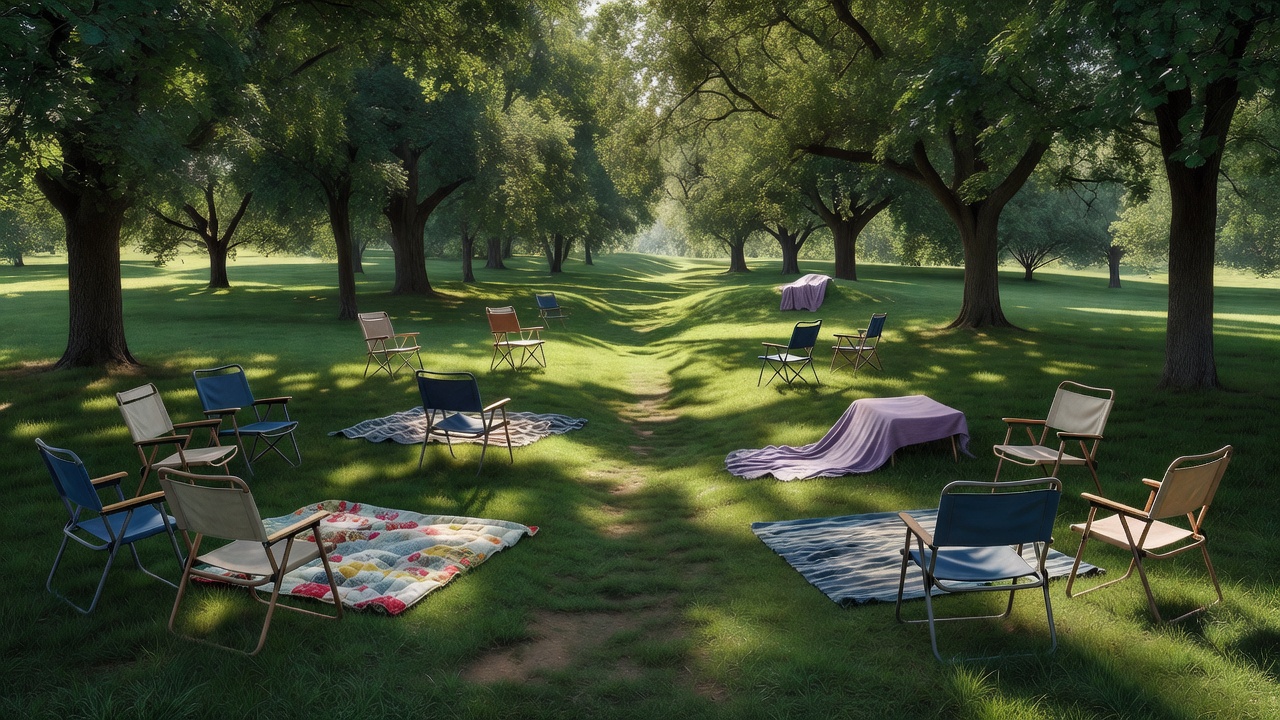
Do not assume everyone can lower themselves onto a blanket and stand up again comfortably. Ask privately whether a backed chair, firmer seat or space for personal equipment would help. Bring stable chairs suitable for their users and follow the manufacturer’s load and setup instructions. Check that each chair opens fully and stands securely on the actual ground.
Use a dry groundsheet beneath blankets, with extra padding where useful. Arrange chairs and blanket spaces around an open centre rather than separating “chair people” from everyone else. Leave space for a wheelchair to join the same conversation without needing a transfer. Keep bags, instrument cases and cooler straps out of movement routes, including the route to toilets.
Build small zones without building barriers
A relaxed base needs only a few clear areas: somewhere to sit, somewhere for food and a place for bags. A quieter seat slightly away from the player or speaker helps people take a break without leaving the group entirely. Keep food reachable, but avoid placing a cooler in the middle of an important access route.
Position children’s activities where their responsible adults can supervise comfortably. Water edges, roads and cycle routes need particular thought; music and conversation can distract adults from watching. Do not describe a location as child-safe simply because it is popular with families. Agree who is supervising, and move the gathering if the layout makes that difficult.
Plan for shade that moves
Notice where the sun will be later, not just where it is on arrival. Tree shade shifts, and a comfortable blanket can become exposed while people are eating. Offer water and sensible breaks, and make moving the group an ordinary option. Do not depend on a small patch of shade accommodating everyone for the whole afternoon.
If you bring a canopy or umbrella, confirm it is permitted and follow its wind limits and anchoring instructions. Never attach equipment to trees without permission. Avoid areas beneath damaged branches, and do not treat tree cover as protection from lightning. Check the local weather forecast, heat information and any official warnings before leaving and during changing conditions.
Make the backup clear before arrival
Send one concise message containing the meeting point, route details, toilet information, what seating is available and your weather decision. Explain whether guests should bring anything, but do not make comfort depend on an unconfirmed list of contributions. Choose a specific contact method for late arrivals, especially where mobile reception may be unreliable.
Have a realistic postponement option. If thunder is heard, seek a substantial building or enclosed hard-topped vehicle rather than gathering under a tree. The National Weather Service has practical lightning guidance; consult local authorities for warnings in your area. Finish by walking through the site, collecting small litter and leaving paths, vegetation and furniture as you found them. The Leave No Trace principles provide a useful general framework.